
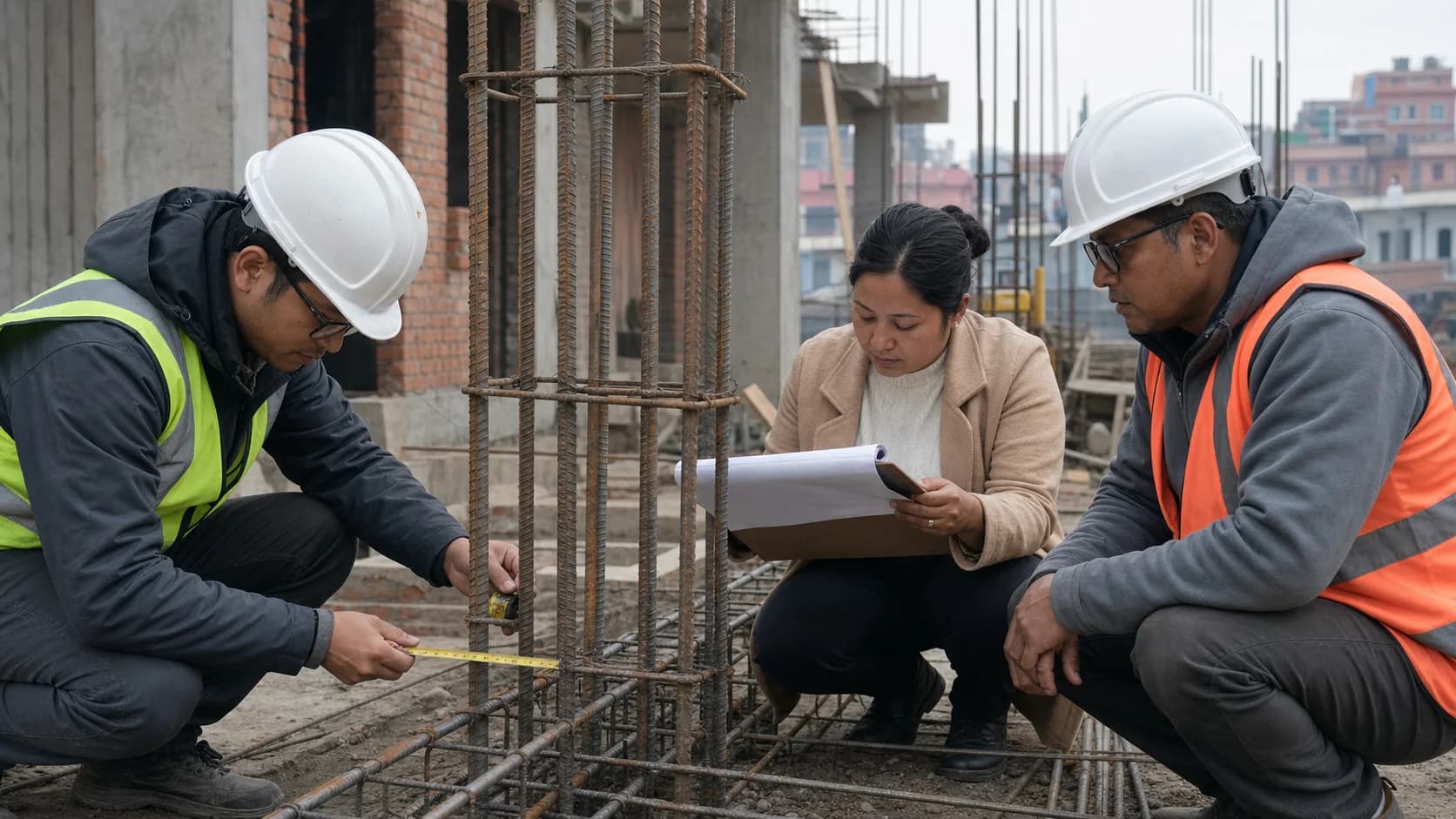
Last year, a family in Lalitpur hired a contractor they found through a relative. The quote was NRs 78 lakhs for a 3BHK, two-floor home on 5 Aana. By the time they moved in, the bill had reached NRs 1.4 crore - nearly double. The contractor had started strong, then began staging "unforeseen" problems every few weeks: soil issues, material price hikes, scope additions. Each time, the family paid. They had no written contract that specified the full scope.
This story is not unusual. It is the norm. We hear versions of it in almost every initial consultation we take. The numbers may change. The reason changes. But the pattern is identical.
This guide explains exactly what contractor fraud looks like in Nepal, how to spot the red flags before you sign, and what contract terms will protect you.
The Most Common Types of Contractor Problems in Nepal
It is important to separate deliberate fraud from incompetence, because your strategy for dealing with each is different.
1. Incomplete Scope Quoting
This is the most widespread problem, and it is not always deliberate. A contractor quotes you a number that sounds reasonable - say, NRs 3,200 per sqft - but that number only covers the structural frame. Finishing, electrical, plumbing, external works, permits, architect fees - none of that is in the quote.
When you ask him later, he says, "That was not in our agreement." And he is technically right.
What to demand: A complete Bill of Quantities (BOQ) that lists every item - excavation, foundation, structure, masonry, roofing, electrical, plumbing, finishing, external works. If a contractor cannot or will not provide a BOQ, walk away.
2. Material Substitution
A contractor specifies Fe500D TMT steel bars in the contract and uses Fe415 instead. He specifies Grade 53 cement and uses Grade 43. He quotes Italian marble flooring and installs Chinese ceramic. The difference is pocketed.
You will never know unless you are on-site every day or hire an independent supervisor.
What to demand: Material specifications in writing, with brand names where relevant (Hulas steel, Arghakhanchi cement). Request mill certificates for steel. Have a supervisor who can identify and reject substandard deliveries.
3. The Vanishing Contractor
A contractor takes a 30-40% advance payment and either disappears entirely or stops showing up after a few weeks. He says he has a cash flow problem and needs another advance before he can continue. You pay. He slows further.
This model is intentional. A contractor managing multiple sites uses your advance to pay for another project, and moves on when things get too uncomfortable.
What to demand: Payment tied to milestones, not calendar dates. A typical phasing: 15% on signing, 25% at foundation completion, 25% at structure completion, 25% at plaster completion, 10% at handover. Never pay more than 15-20% upfront.
4. Labor Cost Manipulation
A contractor bills daily labor at NRs 1,200 per person and brings 8 people per day. You pay for 8 people. But 3 of them show up only until 10 a.m. and leave to work at another site. The contractor bills full days.
This is extremely hard to detect without daily site supervision.
What to demand: A fixed-price contract for the work, not a labor-plus-material agreement. If the contractor insists on time-and-materials billing, insist on daily attendance registers signed by your site supervisor.
5. The Monsoon Excuse
Many contractors use the monsoon season (June-September) as an excuse to slow down or stop entirely, then restart in October with fresh demands: higher labor rates because "everyone is busy," material price increases, revised estimates.
What to know: Monsoon affects outdoor foundation work most significantly. Structure work, masonry, and interior work can continue through monsoon if properly managed. A good contractor plans for this.
Seven Red Flags Before You Sign
Look for these signs during contractor evaluation. Each is individually manageable. Multiple flags together mean you should move on.
-
No written contract offered. If a contractor says "we go by trust," that trust only protects him. Everything needs to be in writing.
-
Unusually low quote. If one contractor is 20-25% below all others, ask how. He is either planning to cut corners, add change orders later, or both.
-
Cannot provide previous project references or site visits. Any legitimate contractor should give you 3-5 client references you can call and at least 2 completed projects you can visit.
-
Requests more than 20% upfront. This is a warning sign. Standard practice is 10-15% on contract signing.
-
No proper business registration. Ask for PAN, VAT registration, and contractor registration with the relevant municipality or Department of Urban Development and Building Construction (DUDBC).
-
Vague on sub-contractors. Structural, electrical, and plumbing work is typically sub-contracted. Ask who he uses and check their credentials.
-
Pressure to sign quickly. "This rate is only valid this week" is a sales tactic. A good contractor will let you take time to review the contract. Urgency is manufactured.
What a Proper Contract Must Include
If a contractor cannot provide a contract with these elements, do not proceed:
- Complete scope of work - every item, every floor, every trade
- Bill of Quantities (BOQ) with unit rates and quantities
- Material specifications with brands/grades where relevant
- Fixed lump-sum price (or clearly defined mechanism for any variations)
- Payment schedule tied to construction milestones
- Construction timeline with key milestone dates
- Retention clause - hold back 5-10% until defects period expires
- Penalty clause for delays caused by contractor
- Defects liability period - minimum 12 months after handover
- Insurance provisions - contractor should carry site insurance
Without these, you are exposed.
Our contracts at Gharpurja include all of the above. Every client receives a fixed-scope contract with a guaranteed price ceiling before construction begins. Variations only happen with written approval from both parties.
What to Do If You Are Already in a Problem Build
If you are mid-construction and things are going wrong, here is a practical order of actions:
- Stop making advance payments. Only pay for completed work at the agreed milestone.
- Document everything. Photograph the site, take notes on every conversation, keep all receipts.
- Get an independent engineer to assess the work done. A third-party structural assessment costs NRs 15,000-40,000 and can tell you exactly what has been done correctly and what has not.
- Send a formal written notice. State the problems, give a specific timeline for correction (14-21 days), and send via registered post.
- Know your legal options. Disputes with contractors can be taken to the District Court or through construction arbitration. A written contract makes this possible. Without one, it is extremely difficult.
The Safest Option: An All-In-One Partner
The structural reason most homeowners lose money in Nepal construction is that they hire a contractor to execute work they do not understand, and then try to supervise someone whose expertise is in avoiding supervision.
The alternative is to work with a company that:
- Employs its own civil engineers and site supervisors (not sub-contracted)
- Provides a fixed-scope, fixed-price contract
- Handles all materials procurement directly (no contractor markup)
- Gives you daily site photos and weekly progress reports
- Has a financial stake in delivering what it promised
When a contractor knows you will not be on-site and cannot tell good concrete from bad, his incentive is to cut corners. When a professional team supervises their own work and their reputation depends on the outcome, that incentive reverses.
Get a fixed-price estimate from Gharpurja before you talk to any other contractor.